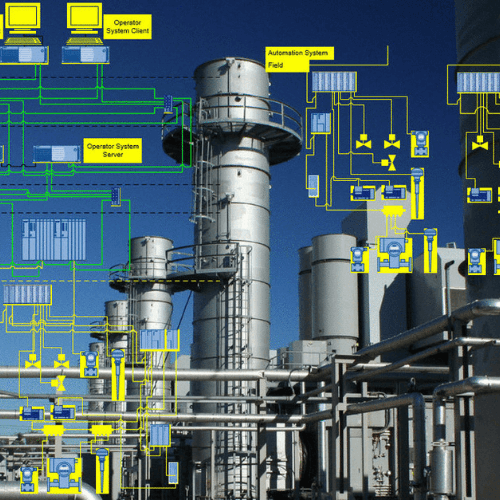
In today’s era of rapid industrial growth and digital transformation, Supervisory Control and Data Acquisition (SCADA) systems have become one of the most critical pillars of automation. SCADA is not just a monitoring tool—it is a comprehensive control system architecture that provides organizations with the ability to gather real-time data, analyze it, and make quick decisions to ensure efficiency, safety, and productivity across industrial operations.
This blog will cover everything you need to know about SCADA systems: from what they are, how they work, their key components, applications across industries, benefits, challenges, and their future in the age of Industry 4.0.
What Is SCADA?
SCADA stands for Supervisory Control and Data Acquisition. It is a centralized system used to monitor and control industrial processes, equipment, and infrastructure across different locations.
SCADA provides operators with:
-
Real-time visualization of industrial processes
-
Historical data logging and reporting
-
Alarm notifications for abnormal events
-
Remote control of equipment and processes
For example, in a power plant, SCADA allows engineers to monitor turbine performance, water pressure, or electricity output, and control those processes without being physically present at the equipment.
How Does SCADA Work?
SCADA integrates hardware and software components to collect data and transmit it to a central system for monitoring and control.
-
Sensors and Field Devices
-
These devices measure parameters such as temperature, pressure, flow rate, or voltage.
-
Examples: thermocouples, pressure transmitters, flow meters.
-
-
Remote Terminal Units (RTUs) or Programmable Logic Controllers (PLCs)
-
RTUs and PLCs act as the brain at the field level.
-
They gather signals from sensors, execute control logic, and communicate with the SCADA master system.
-
-
Communication Network
-
SCADA systems rely on communication protocols (Modbus, Profibus, DNP3, OPC, etc.) to transfer data.
-
Networks can be wired (Ethernet, fiber optics) or wireless (radio, cellular, satellite).
-
-
Human-Machine Interface (HMI)
-
The HMI is the graphical interface where operators view real-time data, charts, alarms, and control settings.
-
It provides dashboards, mimic diagrams, and control panels.
-
-
SCADA Master Station (Control Center)
-
The central computer system that processes and stores all collected data.
-
It generates reports, trends, alarms, and enables operators to take corrective action.
-
Key Features of SCADA Systems
-
Real-time monitoring of industrial processes
-
Data acquisition from distributed locations
-
Alarm management to detect anomalies quickly
-
Historical data storage for performance analysis
-
Remote control of equipment and processes
-
Integration with IoT devices, ERP, and MES systems
Applications of SCADA Systems
SCADA is widely used across multiple industries to manage and optimize operations.
-
Energy and Utilities
-
Monitoring power generation plants, substations, and smart grids
-
Managing load distribution and fault detection
-
-
Oil and Gas
-
Pipeline monitoring for leaks, pressure, and flow
-
Offshore and onshore drilling control systems
-
-
Manufacturing
-
Monitoring assembly lines, production efficiency, and equipment health
-
Reducing downtime through predictive maintenance
-
-
Water and Wastewater Management
-
Supervising water treatment plants and distribution networks
-
Ensuring quality control and regulatory compliance
-
-
Transportation and Infrastructure
-
Railway signaling and traffic management
-
Tunnel ventilation and airport systems monitoring
-
Benefits of SCADA Systems
-
Enhanced Efficiency: Optimizes industrial processes by reducing manual interventions.
-
Cost Savings: Early fault detection and predictive maintenance lower downtime and repair costs.
-
Improved Safety: Immediate alarms reduce risks of accidents and hazards.
-
Scalability: Easily adaptable to growing operations or new technologies.
-
Data-Driven Decisions: Historical data enables better planning, analysis, and optimization.
Challenges of SCADA Systems
While SCADA provides enormous benefits, there are also challenges to consider:
-
Cybersecurity Risks
-
SCADA systems are increasingly connected to the internet, making them vulnerable to cyberattacks.
-
Proper security protocols, firewalls, and encryption are essential.
-
-
High Initial Investment
-
Installing a SCADA infrastructure requires significant upfront costs for hardware, software, and training.
-
-
Complexity in Integration
-
Integrating SCADA with legacy systems or across multiple vendors can be complicated.
-
-
Maintenance Requirements
-
Continuous updates, monitoring, and skilled personnel are needed to keep SCADA systems running reliably.
-
The Future of SCADA in Industry 4.0
The future of SCADA is evolving with advancements in cloud computing, Industrial Internet of Things (IIoT), and Artificial Intelligence (AI).
-
Cloud-based SCADA: Remote accessibility, scalability, and cost efficiency.
-
Edge Computing: Processing data closer to the source for faster response.
-
AI & Machine Learning: Predictive analytics to improve maintenance and decision-making.
-
Integration with Smart Factories: Seamless connectivity between SCADA, ERP, and MES for complete digital transformation.
In the Gulf and the wider Arab world, investments in smart cities, renewable energy, and oil & gas automation are fueling rapid adoption of SCADA systems, making them a cornerstone of industrial modernization.
Conclusion
SCADA systems represent the heart of industrial automation. From power plants and oil refineries to manufacturing facilities and water treatment stations, SCADA ensures efficiency, safety, and reliability in modern industries. Despite challenges such as cybersecurity and cost, the benefits far outweigh the risks—especially as SCADA continues to evolve into a smarter, more connected solution under the umbrella of Industry 4.0.
For companies in the Gulf region and across the Arab world, investing in SCADA is not just a technological choice, but a strategic move toward industrial excellence and future competitiveness.