Introduction
In today’s evolving industrial landscape, industrial automation plays a vital role in improving production efficiency, optimizing machine performance, and creating better integration between equipment and production processes. Achieving these goals requires more than individual control components. It requires a complete engineering approach that combines system design, programming, control, and integration according to the specific requirements of each industrial application.
By combining engineering expertise with advanced automation technologies, manufacturers can develop control systems that support their operational objectives and address the technical challenges of modern production environments.
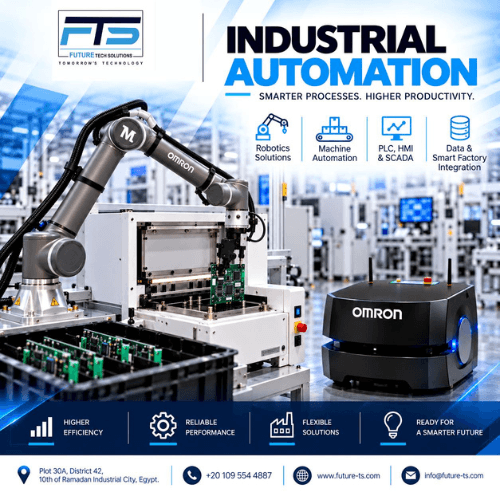
Through its industrial automation expertise and system integration partnership with OMRON, Future Tech Solutions provides integrated automation solutions designed around the specific requirements of industrial facilities, helping manufacturers develop more organized, efficient, and adaptable production systems.
What Is Industrial System Integration?
Industrial system integration is the process of designing, connecting, programming, and coordinating different control components and industrial equipment so that they operate together as one integrated system.
In many factories, machines do not operate independently. Production efficiency often depends on coordination between different processing stages, communication between equipment, and the correct execution of predefined operating sequences.
Achieving this coordination requires a clear understanding of the existing equipment, production requirements, control strategies, and communication methods. The system must then be designed, programmed, tested, and commissioned to ensure that its components operate according to the intended application.
System integration goes beyond connecting equipment. It also involves organizing machine logic, improving operator interaction, monitoring operating conditions, and developing a control structure that can accommodate future modifications when required.
The Role of OMRON Technologies in Industrial Automation
OMRON provides industrial automation technologies used in machine control, industrial sensing, motion control, and various manufacturing applications.
These technologies can be incorporated into automation systems designed to meet different industrial requirements. However, achieving the intended performance depends on appropriate engineering, correct programming, and effective integration between the different system components.
This is where the role of a system integrator becomes essential. A system integrator studies the application, identifies its technical requirements, and translates them into an integrated engineering solution.
The process may include control system design, PLC programming, HMI configuration, equipment communication, system testing, and commissioning, depending on the project’s scope.
Future Tech Solutions applies its industrial automation expertise to integrate OMRON technologies into solutions tailored to the actual requirements of each factory, taking into consideration existing equipment, production processes, and operational objectives.
Industrial Control System Design and Programming
Industrial control systems are fundamental to the organized operation of machines and production lines. Their effectiveness depends on how accurately the control strategy and programming reflect the actual operating requirements.
Industrial automation projects may involve the design of control systems, programmable logic controller (PLC) programming, and human-machine interface (HMI) configuration. These elements enable operators to interact with machine functions, monitor operating conditions, and respond to system notifications.
The programming process involves defining operating conditions, machine sequences, control signals, and the appropriate system responses to abnormal conditions or alarms.
HMI interfaces can also be configured to present important operating information in an organized format, helping operators understand machine status and supporting maintenance teams during troubleshooting.
Since every machine and production process has its own requirements, control systems must be designed according to a proper technical assessment rather than relying on generic configurations that may not suit the application.
Machine Integration and Production Process Coordination
In integrated production lines, one stage may depend on the completion of another before the next operation can begin. Effective coordination between machines and control systems is therefore essential to maintaining an organized production sequence.
Through industrial system integration, operating sequences can be developed to define how equipment interacts, when each stage starts or stops, and how the system responds to different signals and operating conditions.
This requires evaluating the relationship between machines, communication requirements, and the control logic needed for each stage of the process.
Proper integration can help improve coordination between production stages, simplify machine status monitoring, and establish a more organized operating structure across the production line.
Future Tech Solutions studies the requirements of each application and develops control and integration solutions suited to the project, whether the objective is to upgrade an existing system or implement a new automation solution.
Industrial Automation and Operational Challenges
Manufacturing facilities face various operational challenges that can affect production performance. These may include recurring machine stoppages, difficulty identifying the causes of faults, insufficient coordination between machines, or the need to upgrade existing control systems.
Such challenges cannot be addressed through one universal solution. Each application requires an assessment of the underlying problem and the identification of the most appropriate engineering approach.
For example, some issues may require reviewing the control logic and operating sequence, while others may involve improving communication between equipment, updating operator interfaces, or reorganizing the signals used by the control system.
By evaluating the application and implementing a suitable solution, industrial automation can help improve operational visibility, support maintenance activities, and contribute to more consistent machine operation.
The results depend on the nature of the problem, the condition of the equipment, the quality of implementation, and how effectively the solution addresses the factory’s actual requirements.
Industrial Automation Across Different Manufacturing Sectors
Industrial automation requirements vary according to the production sector, the materials being processed, and the operating processes involved. Each solution must therefore be designed around the specific needs of the application.
Food Processing and Packaging
Food processing and packaging facilities require coordination between production, filling, packaging, and conveying operations. Integrated control systems can help organize machine sequences and coordinate different equipment functions according to the production line design.
Flour Mills
Flour mills require coordination between equipment and different processing stages. Properly designed and programmed control systems can help organize operations and improve integration between equipment, according to the technical requirements of each milling facility.
Feed Mills
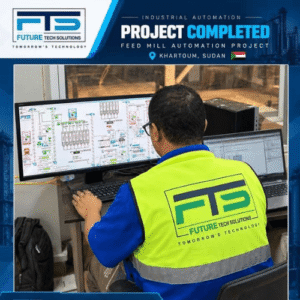
Feed manufacturing involves multiple processing stages that require coordination between machines and production operations. Industrial automation can support process sequencing and equipment integration according to the technical design and operational requirements of the facility.
Manufacturing and Production Lines
Across different manufacturing sectors, system integration can support coordinated machine operation, organized communication between equipment, and the development of control systems that reflect changing production requirements.
In all these applications, effective performance depends on appropriate engineering, suitable automation technologies, and proper implementation, programming, testing, and commissioning.
Why Work with a Specialized System Integrator?
The success of an industrial automation project depends not only on the technologies used but also on the ability to understand the factory’s requirements and translate them into a complete, functional control system.
Working with a specialized system integrator helps organize the different stages of a project, beginning with technical assessment and scope definition, followed by system design, programming, integration, testing, commissioning, and handover.
A proper engineering assessment can also help identify potential challenges before implementation, evaluate compatibility with existing equipment, and consider future maintenance and expansion requirements.
This approach shifts the focus from treating each component separately to evaluating the performance of the complete system and how effectively it supports the production process.
Future Tech Solutions: Industrial System Integration with OMRON
As an OMRON system integration partner in industrial automation, Future Tech Solutions provides engineering solutions focused on developing control systems and integrating industrial equipment and processes.
Our areas of expertise include industrial control system design, PLC and HMI programming, machine automation, industrial sensing applications, motion control, and system integration according to project requirements.
We begin by understanding the application and its operational needs to determine the appropriate technical solution. Our work focuses on control system design, programming, component integration, and testing in line with the defined project scope.
Whether the objective is to upgrade an existing control system, automate a machine, or implement an integrated production line solution, Future Tech Solutions focuses on delivering practical engineering solutions tailored to the factory’s requirements, using OMRON technologies as part of an integrated automation system.
Conclusion
Integrated industrial automation is an important step toward improving production processes, enhancing machine control, and achieving better coordination between industrial equipment.
However, obtaining the full value of automation technologies requires more than selecting control components. It involves understanding the application, designing the system, developing the appropriate programming, integrating equipment, and carrying out the necessary testing and commissioning.
Through its industrial system integration expertise and the use of OMRON technologies, Future Tech Solutions develops automation solutions tailored to the technical and operational requirements of manufacturing facilities.
Our focus is on building organized, integrated, and adaptable control systems that address real industrial needs and support the continued development of production operations.
Future Tech Solutions — Integrated Automation Solutions Built Around Your Industrial Needs.