Introduction
With the continuous development of industrial technology, accurate measurement and process control have become essential factors in maintaining production stability and meeting operational requirements. In many industrial applications, weighing is not limited to determining product quantity; it also plays an important role in process control and production monitoring.
The importance of weighing technology increases in applications involving filling, batching, quantity measurement, and material flow control. These processes require devices capable of processing weight data, displaying measurement values, and transmitting information to control systems according to the requirements of each application.
This is where BAYKON industrial weighing and control solutions play an important role. Its product range includes digital weight indicators, weight data transmitters, and controllers designed for different industrial applications.
Through its expertise in industrial automation, Future Tech Solutions provides BAYKON products to meet manufacturers’ requirements and help them identify suitable solutions for their applications, taking into consideration operational needs and integration with industrial control systems.
The Importance of Weighing Systems in Industrial Processes
Many industrial processes depend on weight data as an essential element in monitoring operations and controlling the quantities of materials used or produced. The nature of these applications varies according to the industry, the product, and the process being performed.
In some applications, operators need to read and monitor weight values directly. Other applications require weight data to be transmitted to a control system, where it can be used as part of a defined operating sequence.
The performance of an industrial weighing system depends on the integration of its different components, starting with the measurement components, followed by the weight indicator or data transmitter, and extending to the control system that receives and uses the information according to the required functions.
For this reason, selecting the right weighing device involves more than considering measurement accuracy alone. It also requires evaluating the application, operational requirements, available communication interfaces, and compatibility with the other components of the industrial system.
From Weight Measurement to Production Process Control
Integrating weight data with industrial automation systems has become an important part of modern industrial applications. Instead of using weight measurements solely for display, manufacturers can incorporate this information into control systems to support functions suited to their production processes.
For example, some applications require continuous weight monitoring during operation, while others use measurement data as part of a filling cycle or make weight information available to a Programmable Logic Controller (PLC) to execute a specific operating sequence.
Depending on the capabilities of the selected device and the system configuration, this integration can support several functions, including:
- Monitoring weight readings during operation.
- Transmitting weight data to compatible control systems.
- Supporting weight-based filling applications.
- Using measurement data in batching and quantity control processes.
- Integrating weighing operations with other machine functions or production line operations.
- Making measurement data available to industrial monitoring systems when the required integration capabilities are supported.
The available functions vary according to the equipment specifications, system configuration, and overall control system design.
The main objective is to select a solution that makes effective use of weight data while ensuring compatibility between system components and the actual operational requirements.
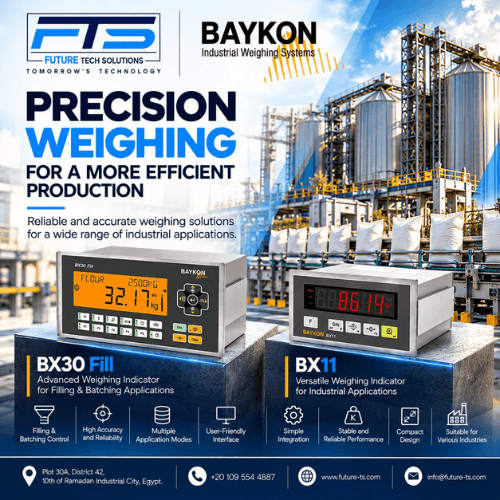
BAYKON Digital Weight Indicators
Digital weight indicators are important components of industrial weighing systems. They display and process weight information according to the capabilities of the selected device.
These devices allow operators and compatible systems to access the required weight readings. Depending on the model, they may also support communication and integration functions with external equipment according to their technical specifications.
BAYKON offers several digital weight indicator models, including:
- BX10
- BX11
- BX13
Selecting the appropriate indicator depends on the application requirements, data display needs, required operating functions, and available communication and integration capabilities.
The selection process should include reviewing the technical specifications of the required model to verify its suitability for the intended application, operating conditions, and system functionality.
By providing these products, Future Tech Solutions helps manufacturers explore suitable options for different industrial weighing applications based on the technical requirements of each project.
Weighing Controllers for Specialized Industrial Applications
In some industrial applications, displaying weight or transmitting measurement data is not sufficient to meet operational requirements. The process may also require a dedicated controller designed to support specific functions, such as controlling weight-based filling operations.
Specialized controllers can support the required functions according to the capabilities and configuration of the device. They may also be integrated into a machine or industrial system when supported by the relevant technical specifications.
BAYKON’s product range includes several models for industrial weighing and control applications, such as:
- BX30
- BX30 FILL
- BX30 PLUS
- BX13 Filling Controller
Selecting the appropriate product requires evaluating the industrial process, the required operating sequence, control functions, available communication interfaces, and compatibility with the other system components.
The technical documentation for each model should also be reviewed to verify its supported functions and suitability for the intended application.
By carefully evaluating project requirements, manufacturers can identify a suitable solution that meets their operational needs and supports the development of an integrated control system.
Filling Applications and Weight Control
Weight-based filling systems are used across various industries that handle powders, granules, and bulk materials. These applications rely on determining the required quantity of product and controlling the filling cycle according to a target weight.
Such applications require coordination between the measurement process, control functions, and filling equipment, while considering product characteristics, operating conditions, required production speed, and accuracy requirements.
Depending on the system design, an operating cycle may involve receiving weight data, monitoring the measured value, executing filling stages, and determining when the target weight has been reached according to the configured control sequence.
BAYKON products designed for filling applications include the BX30 FILL and BX13 Filling Controller, subject to verification of each model’s suitability for the intended application and its official technical specifications.
The BX30 PLUS may also be considered for applications that match its documented functions and capabilities.
Successful filling control depends not only on selecting the appropriate controller but also on designing the complete system correctly. This includes the measurement components, product feeding method, operating sequence, and integration with the filling machine.
This is why clearly identifying the application’s requirements is an essential step before selecting the equipment or designing the control system.
Digital Transmitters for Weight Data
In industrial automation systems, weight data may need to be transferred from the weighing system to controllers or other devices within the system.
Digital transmitters make weight data available to compatible equipment through the communication interfaces supported by the selected device.
One example is the BAYKON TX20 Digital Transmitter, which can be evaluated for industrial weight data transmission and automation integration applications.
Selecting the appropriate transmitter requires reviewing several technical factors, including available communication interfaces, the required data format, compatibility with the receiving controller or device, installation conditions, and the intended application.
Compatibility between all system components should be verified before implementation to ensure that data can be transmitted and used as required.
Proper integration planning helps manufacturers incorporate weight data into their industrial control systems rather than treating it as information separate from the rest of the production process.
Integrating BAYKON Products with PLC and SCADA Systems
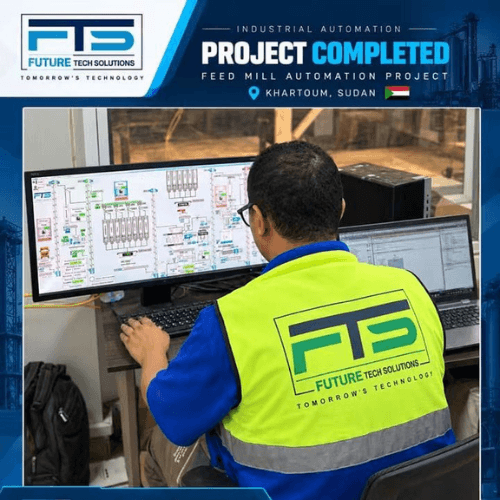
Industrial weighing devices often operate as part of an integrated automation system that includes Programmable Logic Controllers, operator interfaces, monitoring systems, and other equipment associated with the production process.
Programmable Logic Controllers (PLCs) execute control logic and manage operating sequences. They can use weight data when the selected weighing device and communication interface support the required integration.
Supervisory Control and Data Acquisition (SCADA) systems can be used in suitable applications to display process information, monitor operating conditions, and manage alarms, depending on the system design and the data available from the control system.
Integrating weighing devices with these systems requires identifying the necessary data, reviewing communication compatibility, developing the control logic, and testing the complete system to ensure that all components operate according to the defined requirements.
Industrial automation expertise is important in determining the appropriate integration method and ensuring that the selected weighing devices work effectively with the other components of the system. It is also essential to verify that the required functions and communication protocols are supported by the specific devices being used.
Through its experience in industrial automation and control, Future Tech Solutions helps manufacturers evaluate their application requirements and determine how suitable BAYKON products can be incorporated into industrial control projects.
How to Select the Right Industrial Weighing Solution
Selecting the right industrial weighing solution requires a clear understanding of the production process and the functions expected from the device. Some applications may require a digital weight indicator for display and monitoring, while others may need a transmitter for data communication or a specialized controller for filling operations.
To identify the most suitable solution, several key factors should be considered.
1. Define the Application
Determine whether the application requires weight indication, measurement data transmission, filling control, or another specific industrial function that depends on weight measurement.
2. Identify the Required Control Functions
Define the operating sequence, target-weight requirements, operator interaction, and any machine interlocks or operating conditions associated with the process.
3. Review Communication and Integration Requirements
Verify that the available communication interfaces are compatible with the PLC, industrial computer, or other equipment that will receive or use the weight data.
4. Consider the Operating Environment
Evaluate the installation location, surrounding conditions, electrical panel requirements, and the industrial environment in which the device will operate.
5. Verify Compatibility Between System Components
Ensure that the selected weight indicator, transmitter, or controller is compatible with the measurement components and the other elements of the automation system.
6. Review Technical Specifications
Consult the official documentation for the selected model to verify its supported functions, electrical specifications, communication interfaces, and installation requirements before finalizing the system design.
Following these steps helps manufacturers select a solution that meets the actual requirements of their application rather than relying solely on the product name or category.
Future Tech Solutions: BAYKON Solutions for Industrial Weighing and Control
As an authorized agent for BAYKON products in industrial automation and weighing applications, Future Tech Solutions provides products suited to the requirements of different manufacturing facilities and industrial applications.
Selecting the appropriate solution begins with understanding the process and its required functions. The next step is identifying products that meet those requirements and evaluating how they can be integrated with the control systems and equipment used within the facility.
Whether an application requires a digital weight indicator, a transmitter for weight data, or a dedicated controller for filling operations, clearly defining the technical requirements is essential to identifying a suitable solution.
By combining product knowledge with experience in industrial automation and system integration, Future Tech Solutions aims to help customers identify solutions that align with their applications and operational needs.
This approach reflects our commitment to providing integrated industrial solutions that support manufacturers in developing their systems and achieving better coordination between equipment and production processes.
Conclusion
Weighing and control technologies play an important role in industrial applications that depend on accurate measurement, quantity management, and controlled filling and production processes.
BAYKON’s range of digital weight indicators, transmitters, and controllers offers several options that can be evaluated according to the requirements and technical specifications of each application.
Through Future Tech Solutions, manufacturers can explore BAYKON products and assess suitable solutions for integrating weighing technology with industrial automation and control systems.
Finding the right solution begins with understanding the industrial process, identifying the required functions, and selecting equipment that meets operational and integration requirements.
Future Tech Solutions – Integrated Industrial Solutions